F.D. Bluford Streaming Service
Project Overview
Team Members: Eric Saltz, Project Lead; Stephen Bollinger, Head of Systems; Iyanna Sims, Head of BMDS; John Teleha, Head of Reference Services; Francene Moore, Law Librarian; Arneice Bowen, Head of Cataloging; and Carter Bing, Head of Network Services for NC A&T State University.
Status: Completed; Jan. 2011 - Sept. 2015. Active Service.
My Role
I was the Project Manager, Media Consultant, Information Architect, User Researcher, and User Experience Designer on my team, and:
- Managed team to carry out streaming service project
- Led audiovisual inventory and database management project
- Involved with securing network and server space for storage and distribution
- Created and Established copyright, access, and procedural guidelines for service
- Facilitated discussion on selecting appropriate user research, media, design, and project management methods
- Extracted findings from research for design opportunities
- Corroborated designs with research (from either preliminary user research or usability testing results)
- Designed and conducted multiple rounds of usability tests on low, medium, and high-fidelity prototypes
Additionally, I also collaborated closely with my teammates and served as a UX designer and interaction designer, and:
- Sketched and iterated on design solutions
- Negotiated and designed an onboarding experience that would fulfill user needs
- Worked closely with team refine user flows of onboarding and product experience
SKILLS APPLIED
- Information Architecture
- User Research
- User Design
- Media Design
- Interaction Design
- Taxonomy
- Inventory
- Copyright Guidelines
- Protocol Design
- Principle
- Participatory Design
- Experience Design
- Sketching/Storyboarding
- User Personas
- Wireframing
- Prototyping
- Interviewing
- Media Storage and Streaming
- Cataloging
- Card Sorting
INTRODUCTION
During my time at NC A&T State University I was hired to develop and manage a campus-wide streaming service. Picture a mini Netflix for a student population of 11,000. The service enables professors to choose from our audiovisual library and pick which materials they would like stream to their classes for a period of time. The intensive project encapsulated multiple roles and areas of subject matter I needed to tackle. I started by developing and overseeing small teams (3-4 members each) that would work in concert with each other to establish the project. These teams included: Digital & Systems (server space & access), Copyright (guidelines and use and accessibility), Cataloging (catalog integration), Database Management (audiovisual database of items), User Research (user research and testing), Design (coding various pages to view or listen to content), and Management Policies (backend policy management). After each group was formed, my goal shifted to work with set deliverables every six months. These goals would inch us closer to an eventual launch date.
PROBLEMS IDENTIFIED
I would need to solve the following problems to make sure the streaming service worked properly
- Server space & access
- Guidelines and use and accessibility
- Catalog integration
- Audiovisual database setup
- User research and testing
- Coding various pages to view or listen to content
- Backend policy management
Our team began this project by pinpointing the problem space we wanted to explore: streaming media. F.D. Bluford Library wanted to turn the corner on 21st century technology and bring the HBCU campus into the digital age with streaming.
Design question: How can we enable streaming media for the use of students to help achieve educational success?
IDENTIFY GOALS
Throughout the project, I worked with members of N.C. A&T State University inside and out of the library to ensure our project’s relevance and effectiveness. Through phone calls, emails, and slack, we identified our study’s goals to be:
- Evaluate how quickly we could make this service a reality
- Evaluate how students and faculty members want this service to run (or if they want it at all)
- Determine how well the library and university can meet user expectations
- Create a narrative model based on participant interviews
- Integrate with library and banner services for an educational launch
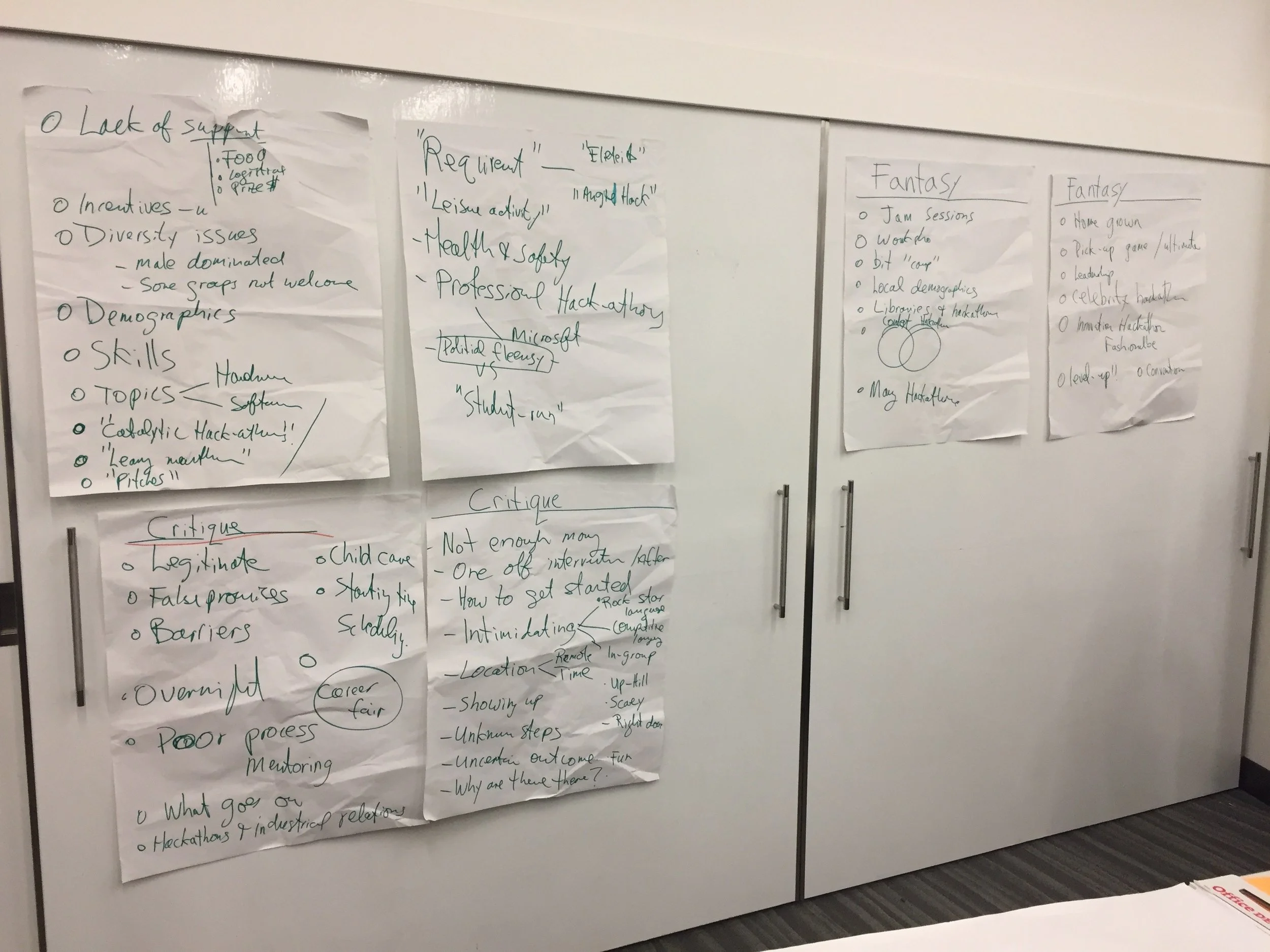
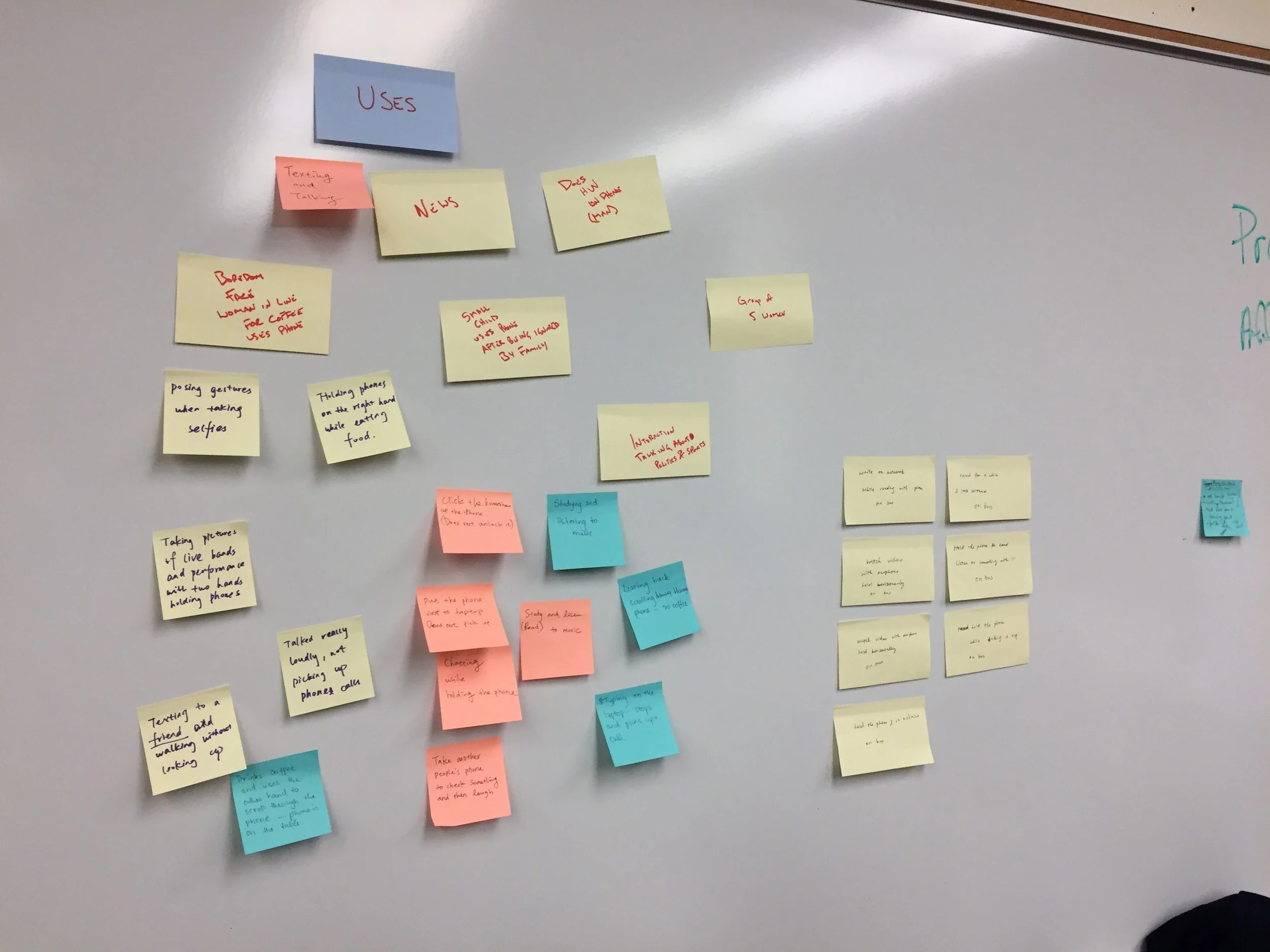
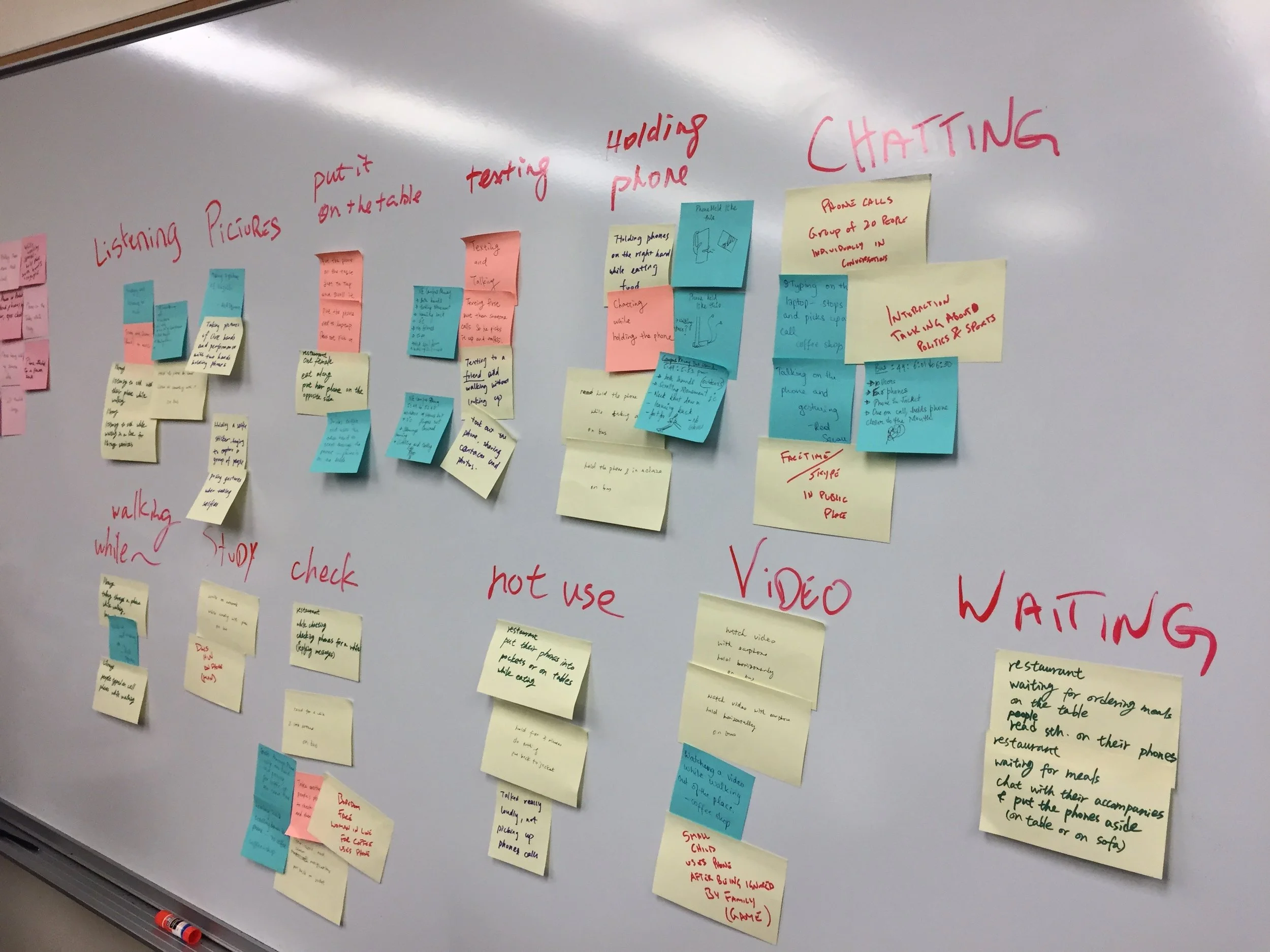
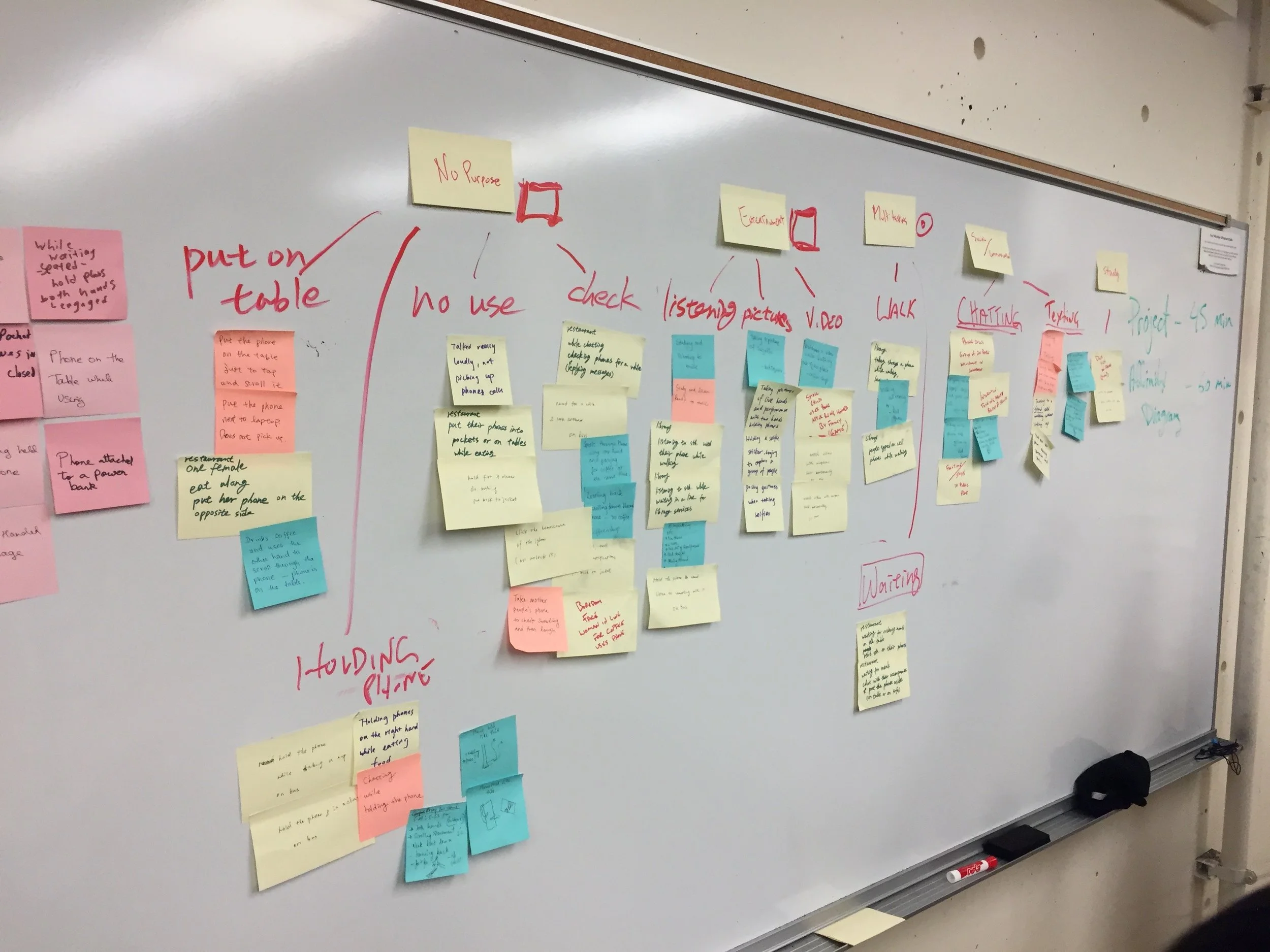
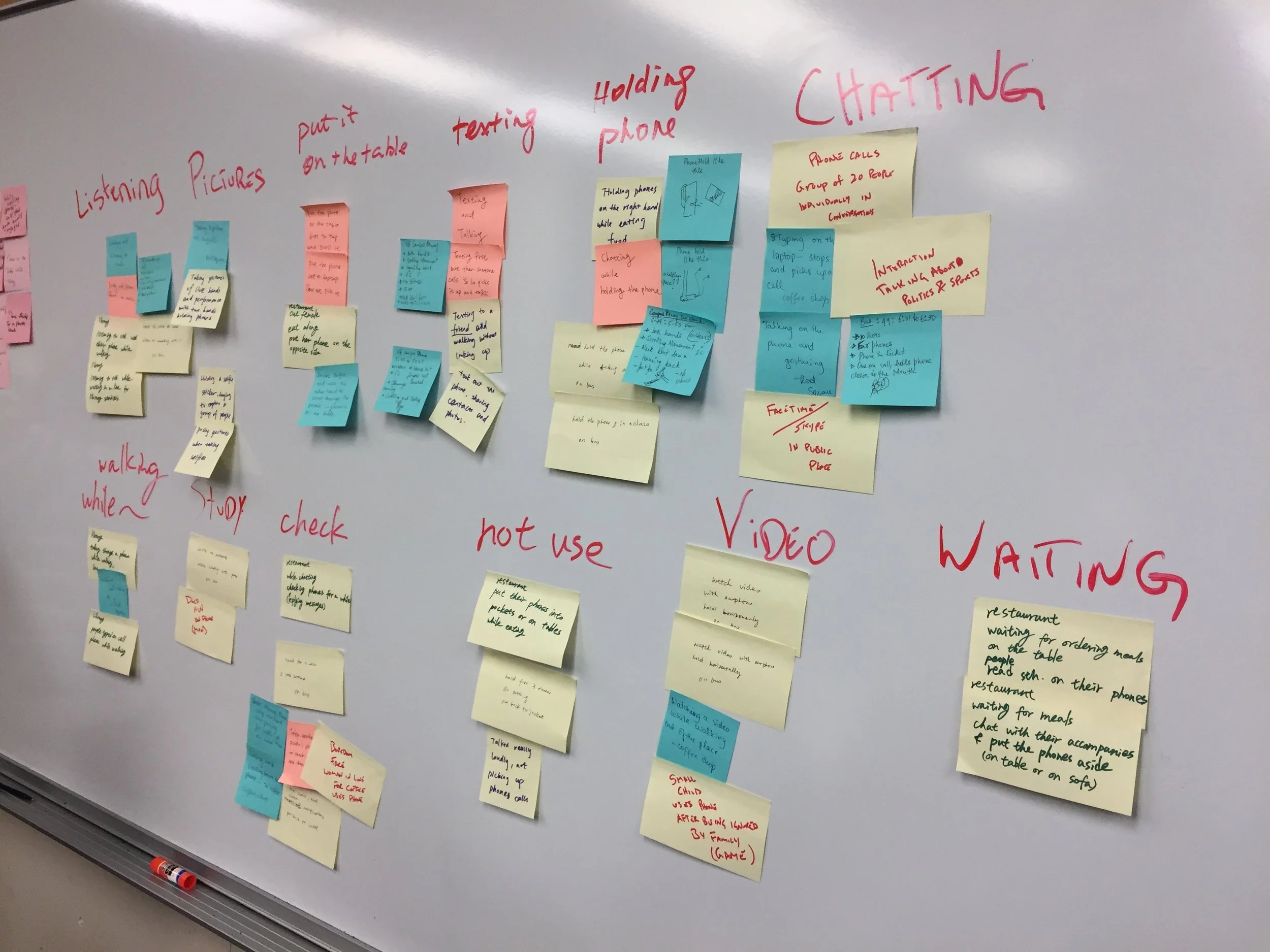
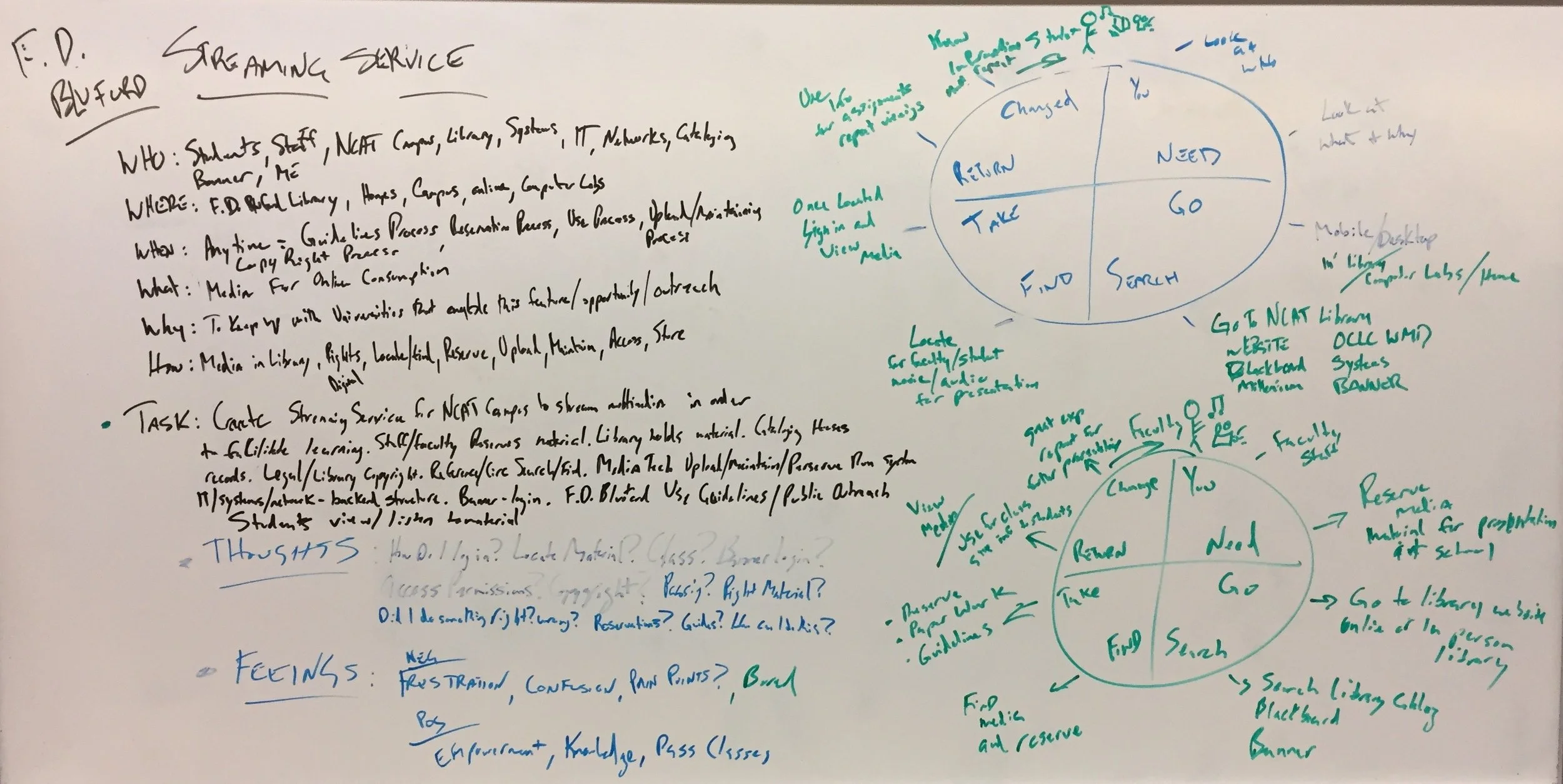
Below is a futures workshop I created with the student workers in the library to find solutions to our streaming service problems
USER RESEARCH
We next set out to select the user research methods that would help us learn more about our users and identify design opportunities. To begin, we first identified our product’s stakeholders as anyone wanting to gain educational content from media sources to teach or attain knowledge from. Our user research participants thus included a mix of faculty and students. We looked into similar university programs that had accomplished the same type of service we wanted to implement. Then did demographic research that approximated our university's population. We also solicited a survey to find out what students might like from an educational streaming service.
INTERVIEWS
Other than doing background research on university programs that have done similar streaming services, we wanted to implement another research method. We chose to conduct Interviews to give us a strong grasp of how students and faculty members approached online media consumption. We wanted to see what areas we could mimic and which were most important to the user.
USER RESEARCH FINDINGS
In summary, our findings support a design solution that would ideally encompass findings from all of our research methods. The proposed solution would:
- Facilitate streaming media content anywhere (mobile and desktop; responsive design)
- Account for technology usage
- Account for login and security
- Account for faculty process with service (details and guidelines)
- Incorporate links for navigation
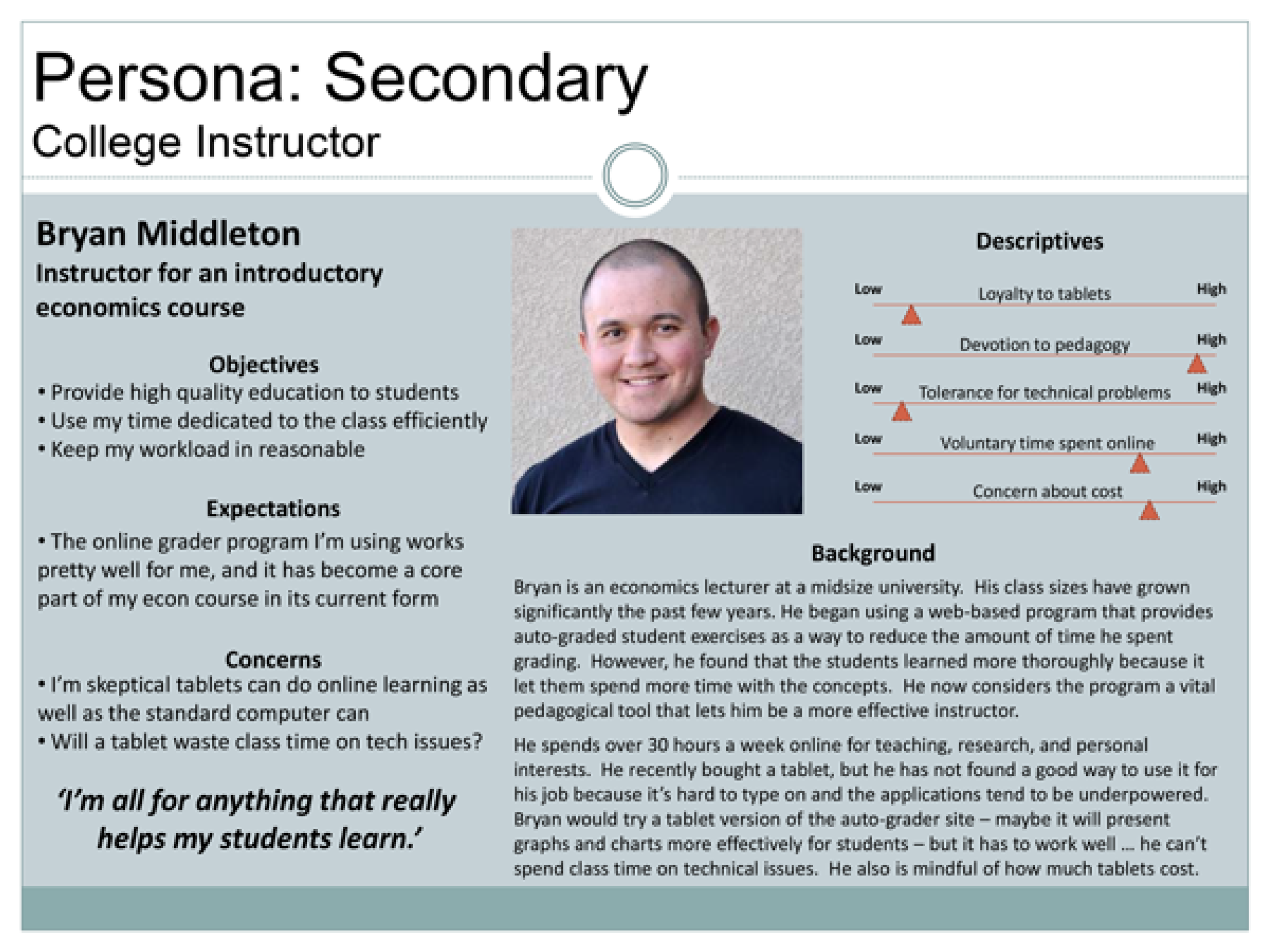
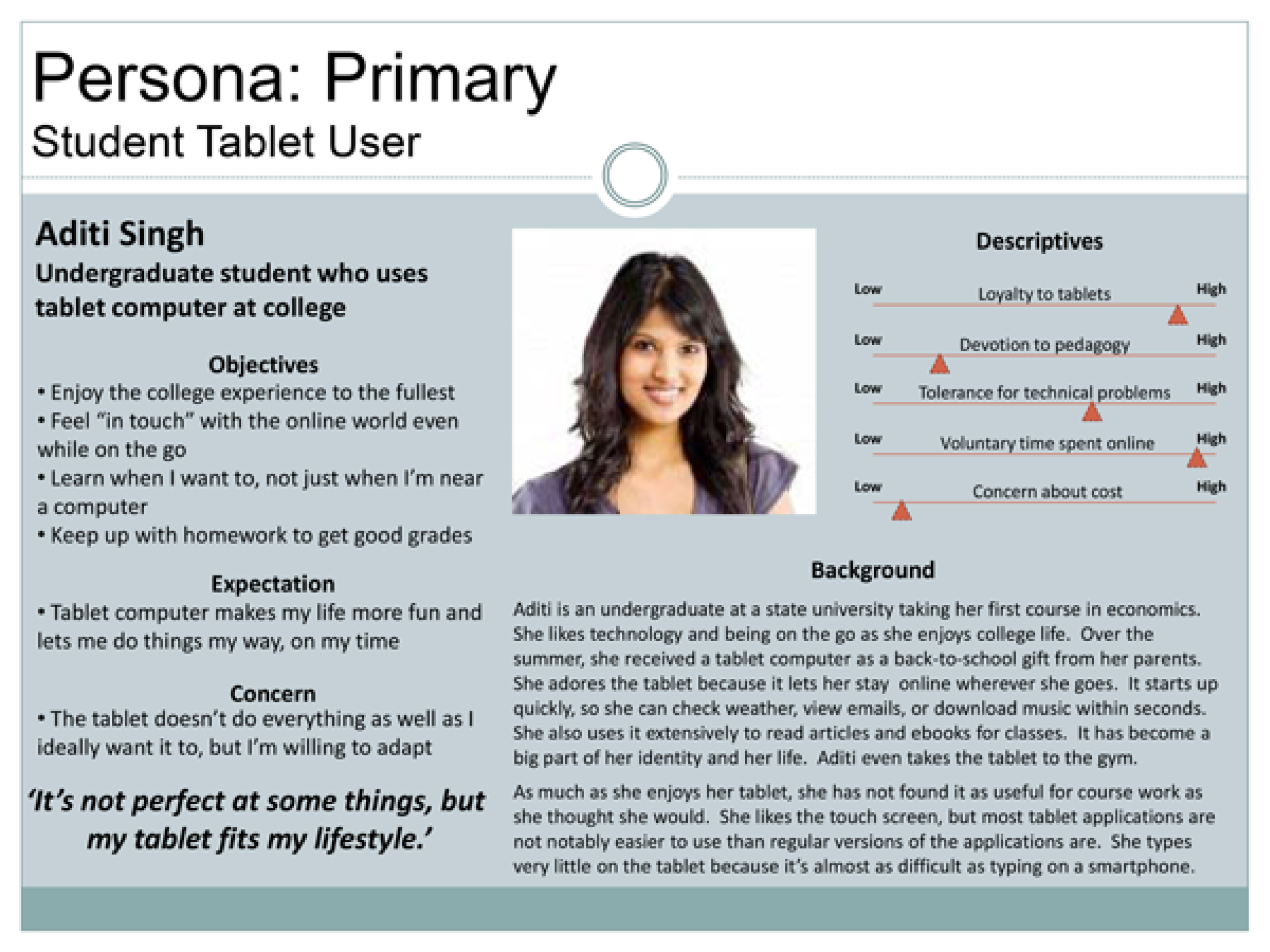
After gathering data from our participants and research, I created two primary user personas as archetypes of our participants and their needs.
The Process
While moving along this 4 year process I encountered multiple road blocks. The digital team had trouble communicating ideas to one another. I fixed this by moving us to Slack. Next, we had access issues. The main cause of this stemmed from campus systems not enabling or giving access to the new library server for the project. We tried switching to the campus server for access and ran into similar problems. This was fixed after my many conversations with other divisions on campus to move the project forward. Once able to use the server the website was able to start beta testing.
The copyright team had similar experiences with communications. This was the first team I created because I realized it may be the slowest process to work with and the most confusing to set straight in guidelines and policy. I was able to work closely with our in-house law librarian, university legal team, and lawyers from the state of North Carolina to correctly phrase language and assess where potential pitfalls might occur as I continued the project. It was challenging getting the answers I needed, however my consistent drive, as well as conversing with the upper level management helped solve these issues. I learned a valuable lesson, communication is key to success.
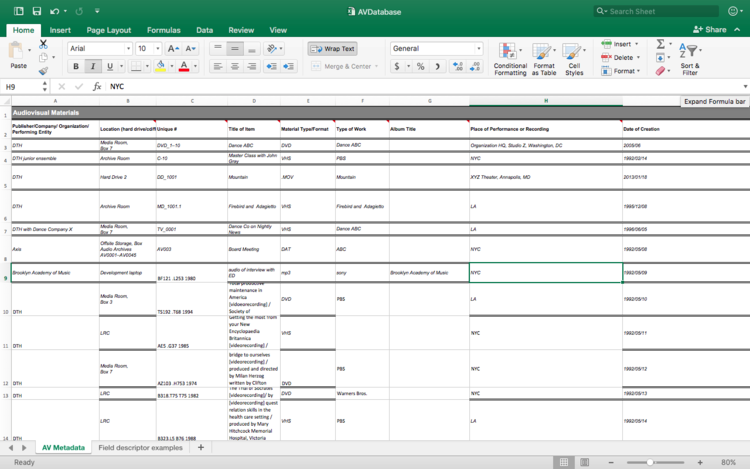
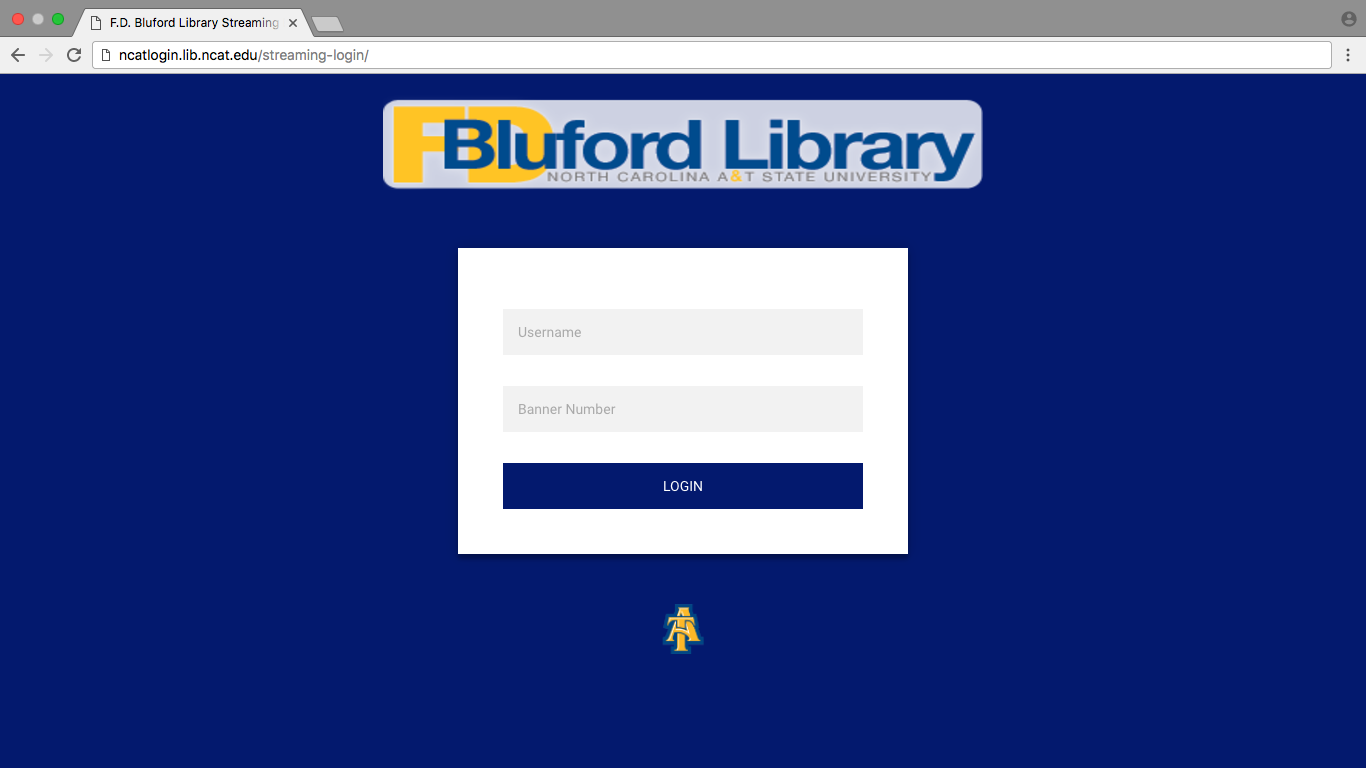
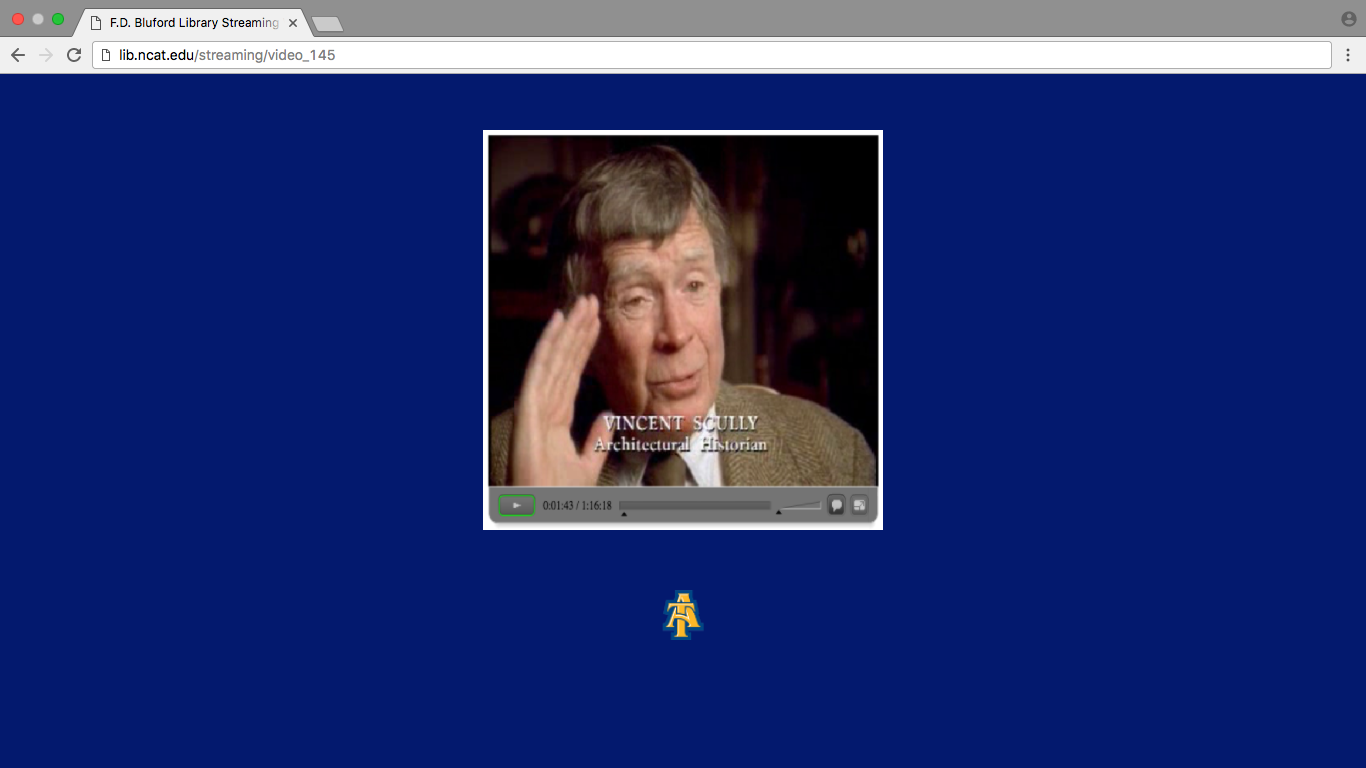
The streaming media properties inventory and material housing were dealt with by the catalog and database management teams. My main task on these teams were shaping and detailing the audiovisual material information into a database that coincided with the content management system (CMS) we were already running. From here I worked with both teams to make sure both databases were accurate with all of the metadata and the digital rights for each material was up to date. We ran into a problem making sure the content each professor chose relayed to the library's CMS (showing they had checked out the material for records use). After meetings with the internal library systems department and identification authority control access, we were able to come up with a solution when each professor checked out an audiovisual material to use. The answer was the authentication page above that would sign in students and professors and link to their school accounts and route back to our CMS.
DESIGN
After eliciting design requirements from our user research, we embarked on the design process and sketched a plethora of possible design solutions. Many of our initial designs were full-fledged experiences that integrated one or more Internet of Things (IoT) devices and technology. These experiences offer users data-driven recommendations throughout their mornings. For example, a smart closet would offer outfit suggestions based on the weather, user’s closet items, and user’s agenda for the day.
After these steps were finished I start to dive in and create the simple pages to test that the process would work from start to finish. Then gave this simple version to a three groups of users (One round of staff and two rounds of work study students). I designed a survey and collected a few informal interview type questions to figure out how well the beta version came across. After initial feedback and changes to the design and implementation of the process itself. This part of the process ran smoother and quicker than the others due to the informal nature and the work being done primarily by myself at this stage. If I have to complete this part again, I would have taken the time to do a focus group and had another member of the staff help me design a more formal survey and interview to elicit responses I might not have looked for or seen.
The last step in the process was working with the management policy team. Five crucial members of the Library staff came together (for close to a year), deciding on the correct language and needs that were to be met in the final policy.
Overall the experience taught me what it is like working with a big team, to manage multiple groups, how to listen and communicate, to respect ideas, to keep focus, to learn new skills, to practice old skills, to research ideas, to test ideas, and how to build a system that serves a wide audience.
FINDINGS & RECOMMENDATIONS
From our study, we found that our participants found the content difficult to navigate and login. Additionally, they uncovered an issue that extended beyond the original narrative scenarios, whereby they showed how Bluford Library's links and search engine results did not match where they needed to go nor had updated links with the search query.
We were able to patch the links within a month. Also, the navigation scenario was addressed and focused on fewer clicks to reach the content.
REFINE AND RETEST
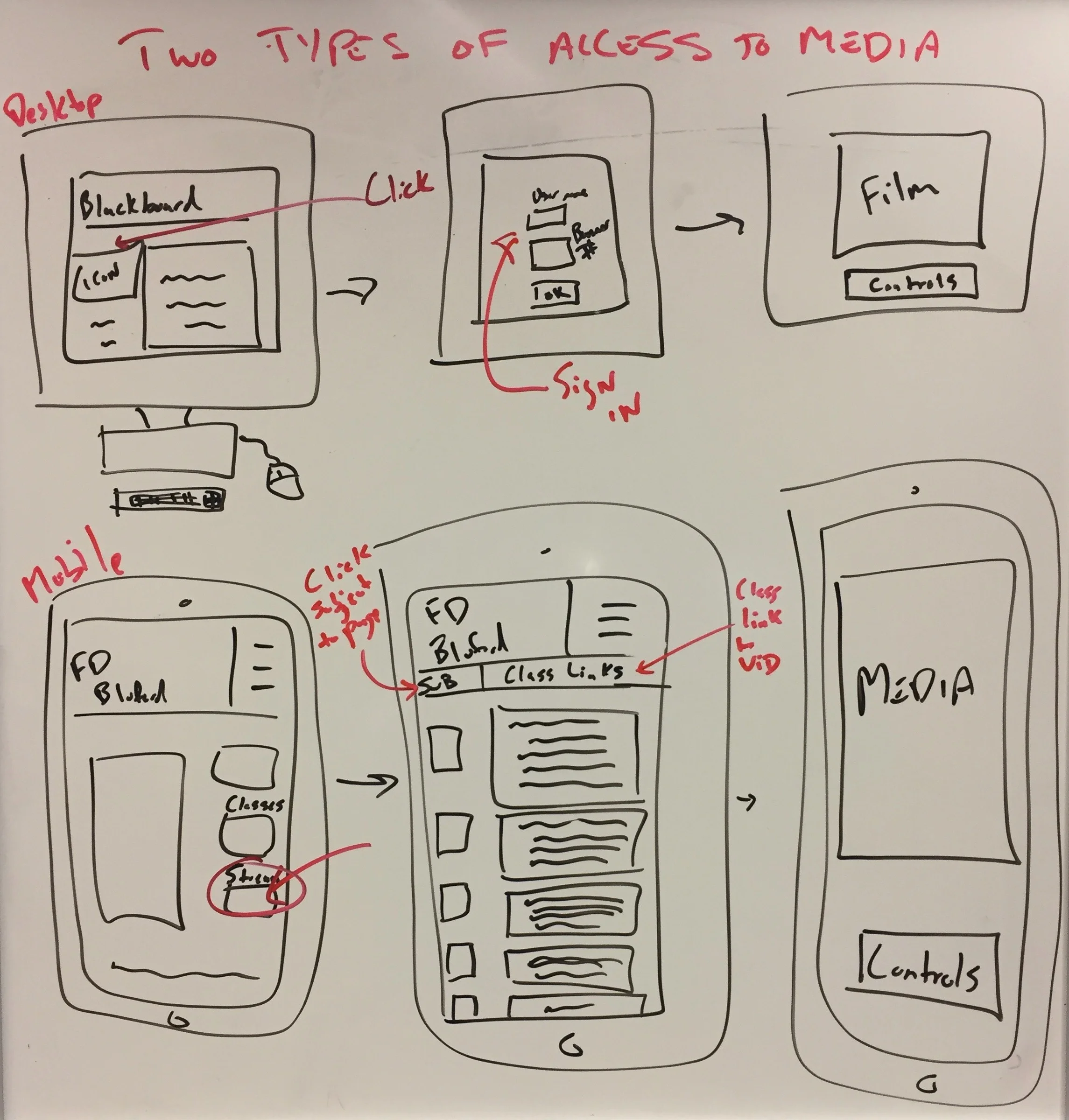
We designed our next iteration of the service in a desktop model and as a standalone mobile app in Principle, conducting usability tests on 5 representative tasks with over 25 participants. Our participants included current undergraduate and graduate students, as well as 4 faculty members to account for these two groups’ varying levels of consistency/inconsistency in their activity and process for the service.
Ongoing Activity
There were several elements of the project that the library continues to do to ensure the service stays active and continues to grow.
- Incorporate feedback from students and faculty after every use: I constructed a short form that takes 3 minutes to fill out. It describes their interaction with the service as a whole and where the highlights and difficulties (if any) were. Also, if there is anything we should add.
- Continue to restructure catalog: When I left the library the next project I set up for the services was to integrate my inventories of the audiovisuals with the catalog instead of piecing them together by request. This part of the project could easily take 4-5 years due to moving to a new CMS and the details of working inside our blackboard and banner systems.
- Add to database: Continue to add to audiovisual inventory. Enlarging the amount of content will continue to make the service a priority and something the campus can use as a selling point for the library.
KEY LEARNING POINTS
This project helped me understand the best and worst aspects about being a project lead. Before this point, I have never managed a team of more than 4. I was being asked to manage over 20 personnel members. I had to learn as I went. There were values of time, communication, and understanding at play. I needed to make sure everyone's points of views were heard, and ultimately guide us on the right path to success.
This project gave me my first insights into User Experience. I had previously done work in social media promoting venues for musicians and the library and archives for university campuses. However, this was the first time where I was tasked the responsibility to shape the experience of a user and how they used a service. I had to rely heavily on my staff and the experiences I gained with interactions with users at F.D. Bluford Library. This experience opened my eyes to ways in which we (as designers) empathize, define, design, prototype, iterate, and evaluate designs to come up with a satisfying solution. One that can only be iterated again and again to make the experience better for everyone.
Factors like taxonomies, ontologies, databases, inventories, navigation, guidelines, storage, networking, security, and user flows are what combine to make a good user experience here. I also had my first interactions with Lucidchart, Slack, SlickPlan, Optimal Workflow, Adobe Media Encoder, Sharepoint, and Principle.
This project has taught me the overall process of what I want to continue to do. Shape media experiences through the guise of Information Architecture, User Experience, Narrative Experience, and interaction Design. I am excited to get to work on future projects.